
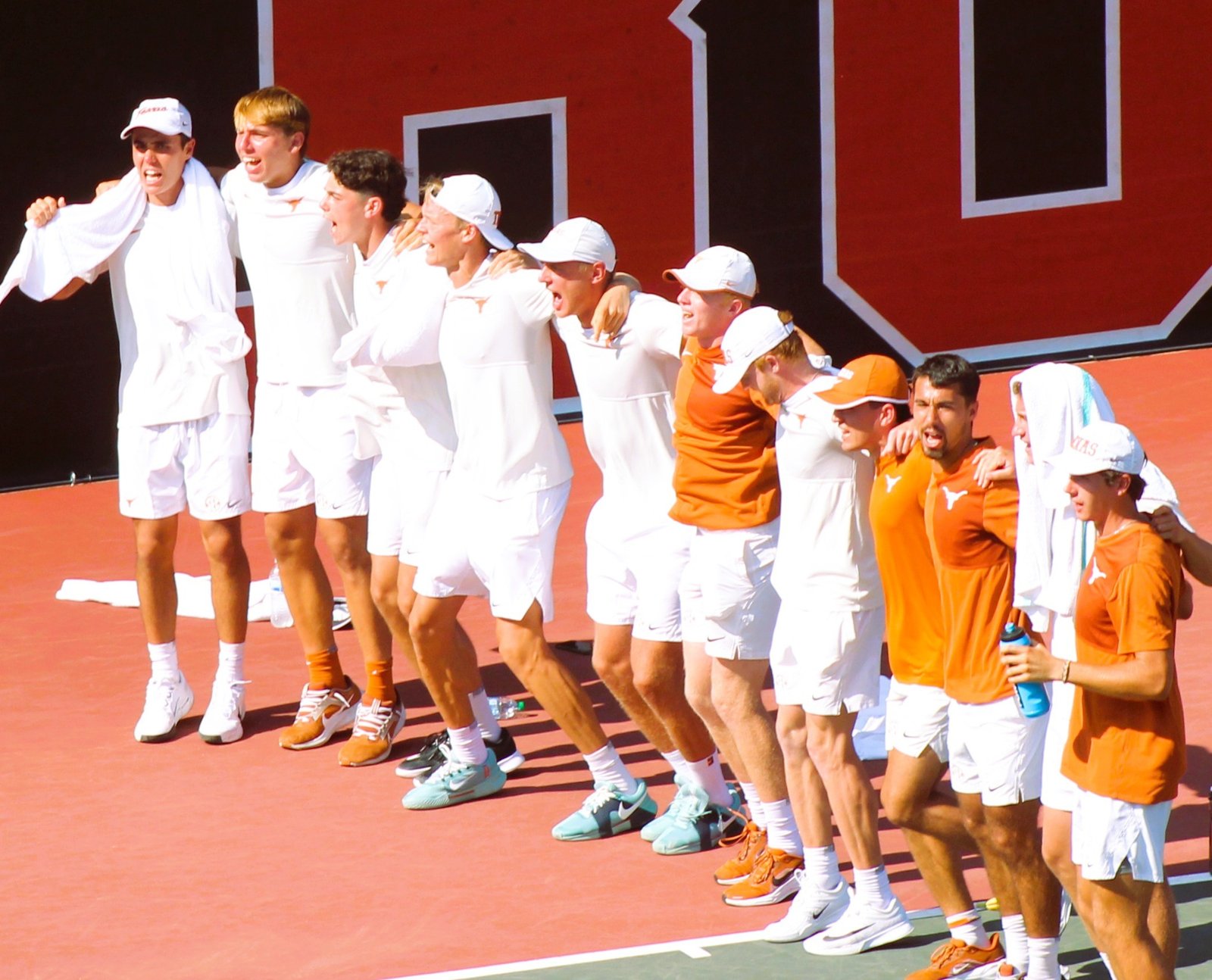
On Wednesday, Texas men’s tennis announced the addition of Matej Dodig to their roster, joining for the fall of 2026. Dodig has a career-high ATP ranking of No. 199 in the world and will be 21 years old when he starts playing for the Longhorns.
In the recent era of college athletics with NIL money and loose transfer rules, college tennis has been fundamentally changed. Players who have spent years competing on the ATP or WTA Tour are turning to college tennis after trying out life as a professional tennis player. The level of the game is rising, but opportunities for tennis players who are graduating high school have dramatically decreased.
As is the case with any other school, Texas is not the root of the problem. But it is a microcosm of it.
In the 2026 spring season, Texas brought in Kalin Ivanovski and Abel Forger among the freshman class. Forger was 20 years old when he signed with Texas with an ATP career high of No. 680, and Ivanovski was 21with a career high of No. 305. Both were considered freshmen. And with Texas’ incoming recruiting class in mind, it’s clear this isn’t a one-off, but rather a trend. Their biggest addition is Dodig, but they’ve also signed Tomasz Berkieta, who will be 20 years old when he dons the burnt orange. Berkieta has an ATP career high of No. 476.
Texas also brought in transfer Gabriel Debru from Illinois, a player boasting a career high of No. 233, which he achieved on March 17th, 2025, a few months before he signed with Illinois.
With these five players, Texas already has something of a super-team. Add in last year’s standouts Sebastian Eriksson, Lucas Marionneau, and Oliver Ojakaar — all with career highs outside the top 800 — and Texas will almost certainly be a top team once again.
Last season, Texas made the final of the NCAA Tournament and very nearly won it. Now, if Texas is going by ATP ranking for its singles lineup, two of its three key pieces could be pushed out, starting a cycle of stalled development for less-accomplished players because of star signings. It may not go that way, as Eriksson and Ojakaar played above Forger in the lineup at the end of the season, but it is a possibility. And Texas’ roster goes deeper than those eight players, but those remaining players on the roster will have few chances to develop as roster spots are taken by older players coming in after trying a professional career. It’s no surprise that there have been departures, as rising junior Evan Burnett recently transferred from Texas to Michigan.
The new NCAA 5-5 rule is supposed to solve the age eligibility issues being faced by all college sports, but it doesn’t stop athletes from trying their hand at a professional career before turning to college when it isn’t successful enough. And tennis is one of the easiest sports in terms of decommitting from a pro career.
The lines between college tennis players and professional tennis players are extremely blurred. College tennis players often spend their summers playing low-level pro events, and there is no limit on what tournaments college tennis players can participate in. Last spring, Michael Zheng played for Columbia following a run to the second round at the Australian Open while ranked in the top 200 in the ATP rankings. But Zheng played four years at Columbia, starting from when he was 18. He never committed to professional tennis, he just played pro events while playing for Columbia. His situation is different from players who spend years on the pro tour before committing to college.
It’s impossible to keep professional tennis players out of college tennis, since the majority of college tennis players have an ATP or WTA ranking. 5-in-5 doesn’t change anything about experienced players turning to college tennis after a few years on tour. There is nothing explicitly wrong with Texas’ roster, but that doesn’t mean it isn’t hurting the sport. College tennis shouldn’t be a backup for a decent but not standout initial pro career. But Texas’ tactics put it in the NCAA final, and if they continue to find success then other schools will certainly follow the model.





One Comment