Assessing Year 1 of electronic line calling

The first season of PlayReplay usage in college tennis is almost over. How has the technology performed so far?
The Intercollegiate Tennis Association approved the use of electronic line calling in August of 2025 after a pilot program in 2024, partnering with PlayReplay after it received the "Silver Classification" by the International Tennis Federation. PlayReplay is a more affordable version of the highly regarded Hawk-Eye technology, with accuracy ratings at around 99 to 1, while Hawk-Eye is touted to be "nearly 100% accurate."
In a college tennis world without line judges, competition rests on somewhat shaky ground with calls made by players and approved by the chair umpires. On the far sides of the court where the chair umpire does not have a good vantage point, it is effectively the honor system. If a ball is close, it might as well be out.
So for that reason, electronic line calling is extremely helpful for the college game, maybe even more so than the pros. College tennis would be a better place if electronic line calling was implemented on every court for every competition. But that is just not feasible. With a five-figure yearly subscription fee, most schools simply can't afford it — especially considering the tightness of budgets in the Revenue Share era.
But without universal implementation, problems can arise. There are three main issues that have become evident so far.
Changing rules for specific events
Most college tennis events do not make use of electronic line calling, mostly for financial reasons. The technology is just too expensive right now. So when players compete in events that do use PlayReplay every now and again, they aren't used to the rules, procedure and the strategy that comes along with it.
Changing the rules of competition for specific events, especially when they are the most important events, can encroach on the border of what is fair. Adaptation to or familiarity with the new rules can impact play and give certain players unfair advantages.
The question is: Are those arbitrary advantages more unfair than allowing players to make their own line calls without significant guard rails?
Punishment for overturning calls
If players call a ball out but PlayReplay says the ball is in, they receive a warning for their first infraction. If it happens again, they receive a "point penalty", and a point is awarded to the opponent. Let's say the game is thirty-all, and a Player 1 calls the ball out, but PlayReplay deems the ball in. Player 2 would win the game.
This seems reasonable as it disincentivizes players from making out-calls if they are not 100% sure, but it also can introduce a sort of paranoia that players will not call a ball out that they would have under normal conditions. This also just boils down to the fact that competition is changed for important events, giving an arbitrary advantage to those who are experienced or adaptable.
What if it goes down?
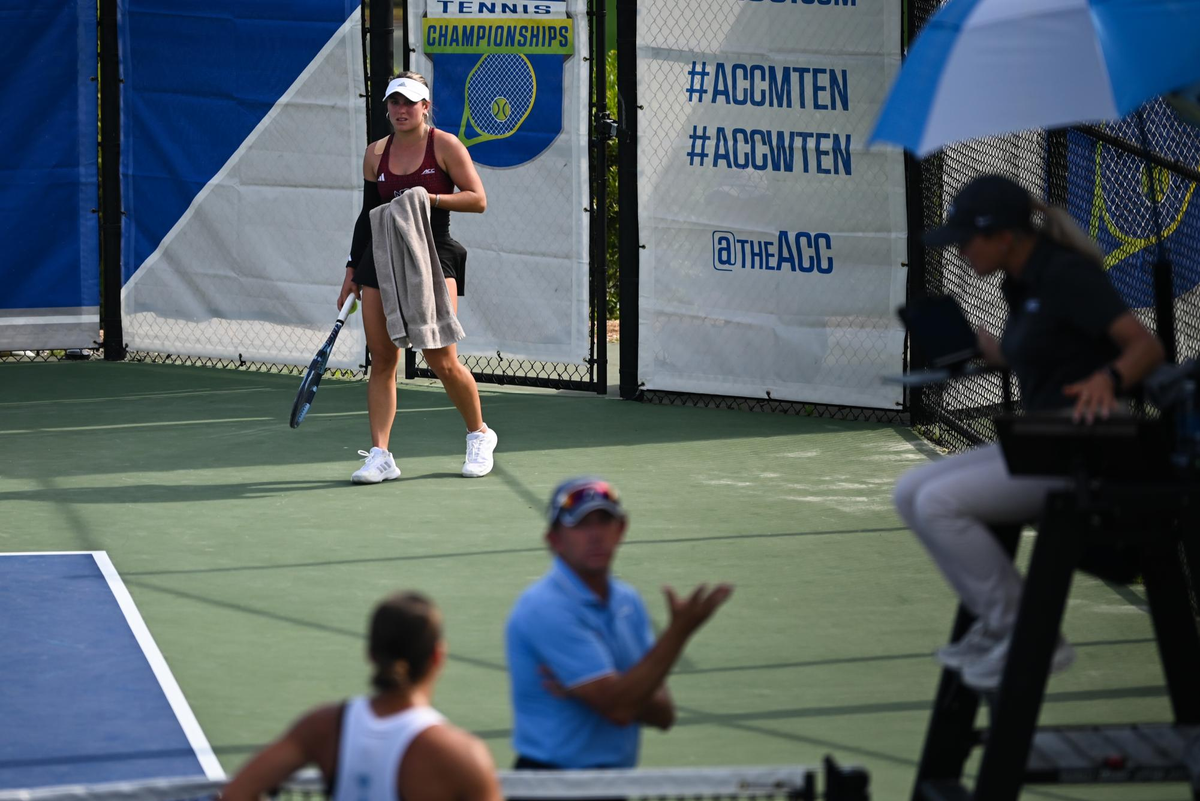
At the end of the match between No. 2 Reese Brantmeier of UNC-Chapel Hill and No. 43 Mia Slama of NC State in the ACC Women's Tennis Championship semifinals, chaos ensued as the PlayReplay system could not deliver a verdict.
Slama was on the verge of delivering a season-defining upset versus the reigning NCAA singles champion, but first, she would have to endure a grueling two minutes of standing around, waiting for the system to make the call.
Slama had called a ball wide on the side of the chair umpire. Following normal ITA procedure, the chair umpire agreed with the ruling — not what she was supposed to do while PlayReplay was in use. Brantmeier challenged the call, sort of a Hail Mary with the match that was all-but lost.
NC State head coach Simon Earnshaw speculated after the match that PlayReplay had been making errors throughout, and Brantmeier was making the reasonable grasp that maybe, it would make another error.
"There were a couple of calls with the machine in that match where I don't know what was going on," Earnshaw said. "Look, we can't see everything, but these were clear errors. I think both [UNC head coach Brian Kalbas] and myself thought the same. So there was sort of this mentality to just challenge, so they just challenged."
"Then, the freaking thing went down," Earnshaw said.
Maybe it was the heat. In any case, tournament officials could not get it back online. The specific electronic line calling rulebook states: "If the ELC review cannot occur promptly (within 1-2 minutes), the original call stands."
So the call stood and Slama went on to pull off the upset.
The delay could have iced Slama and changed the outcome of the match. The system could have been making erroneous calls and changed the outcome of the match. Or maybe the ball was in, but with the system down, Brantmeier paid the price.
All that is to say: much work can be done improving the system and making sure that players and ITA officials are adjusted to its use. But still, the technology is a step in the right direction to making college tennis more fair.